Why Recycle Glass?
Glass is one of the most environmentally friendly, circular packaging materials on earth. When recycled, it saves immense energy, preserves natural resources, and strengthens regional manufacturing.
Measurable Impact Across the Midwest
Every bottle and jar placed in a purple bin creates real, verifiable economic and environmental returns. Here is what recycling glass achieves:
Number of bottles created by recycling one bottle — glass is 100% recyclable endlessly.
Total number of bottles and jars recycled in 2020 alone through our community programs.
Number of hours of electricity that can power a 100W light bulb by recycling one glass bottle.
Number of Ripple Glass recycling bins accessible across Kansas, Missouri, Nebraska, Illinois, and Iowa.
Number of area bars, restaurants, and businesses that recycle commercial glass with Ripple.
Number of recycled bottles it takes to create an entire attic’s worth of fiberglass insulation.
Number of tons saved from landfills by Ripple Glass last year. Since our 2009 founding, we have kept over 200,000 tons of glass out of regional landfills across the Midwest!
Lower Temperatures, Fewer Emissions
Melting cullet requires far lower temperatures than melting raw minerals like silica sand, soda ash, and limestone.
For every 10% of recycled glass used in manufacturing, energy consumption drops by 2-3%. Using cullet requires 30% less total energy than manufacturing virgin glass from scratch.
Furthermore, recycled glass produces zero process carbon emissions from limestone decomposition. For every six tons of recycled container glass used in manufacturing, a ton of CO2 emissions is eliminated.
Key Statistics
- 30% Energy reduction when melting recycled glass cullet compared to raw virgin materials.
- 1,000,000+ Years an un-recycled glass bottle will sit in an ordinary municipal landfill.
- 1 Ton Of natural virgin minerals (sand, limestone, soda ash) conserved for every ton of glass recycled.
Even More Reasons to Recycle
From reducing industrial air pollution to saving vital natural minerals, here is why recycling glass is indispensable for our future.
100% Circular Packaging
Container glass is 100% recyclable and can be recycled endlessly without loss of purity or quality. It is a primary ingredient in fiberglass home insulation and new glass containers.
No Wasted Resources
Burying perfectly good glass in a landfill wastes all the raw material, fuel, electricity, and human labor that went into manufacturing it in the first place.
20% Less Air & 50% Less Water Pollution
Using recycled cullet produces 20% less air pollution and 50% less water pollution than creating new glass (or fiberglass) directly from raw geological minerals.
>1 Ton of Raw Materials Conserved
Every ton of glass that is recycled results in more than one ton of raw minerals saved:
Power a Light Bulb for 4 Hours
Recycling just one glass bottle saves enough electricity to light a standard 100-watt incandescent bulb for four hours — and powers an efficient LED light bulb for days!
A 6-Pack Insulates a Wall Cavity
A single six-pack of recycled beer or cider bottles produces enough high-efficiency fiberglass insulation to fill an entire standard wall cavity in an energy-efficient home.
Closing the Regional Recycling Gap
Kansas Citians consume approximately 80,000 tons of container glass each year. Previously, only about 5% was recycled. Today, thanks to purple bins, we recycle nearly 20%. Nationally the rate is over 30%, and globally north of 90% — so every bottle you recycle helps us close the gap!
Why Separate Bins Work Best
Glass is excluded from most curbside recycling programs for good reason. Mixed broken glass damages sorting machinery and contaminates paper and cardboard, causing them to be downcycled or landfilled. Separate purple bins keep all recyclables pure.
Keeping Valuable Material Out of Dumps
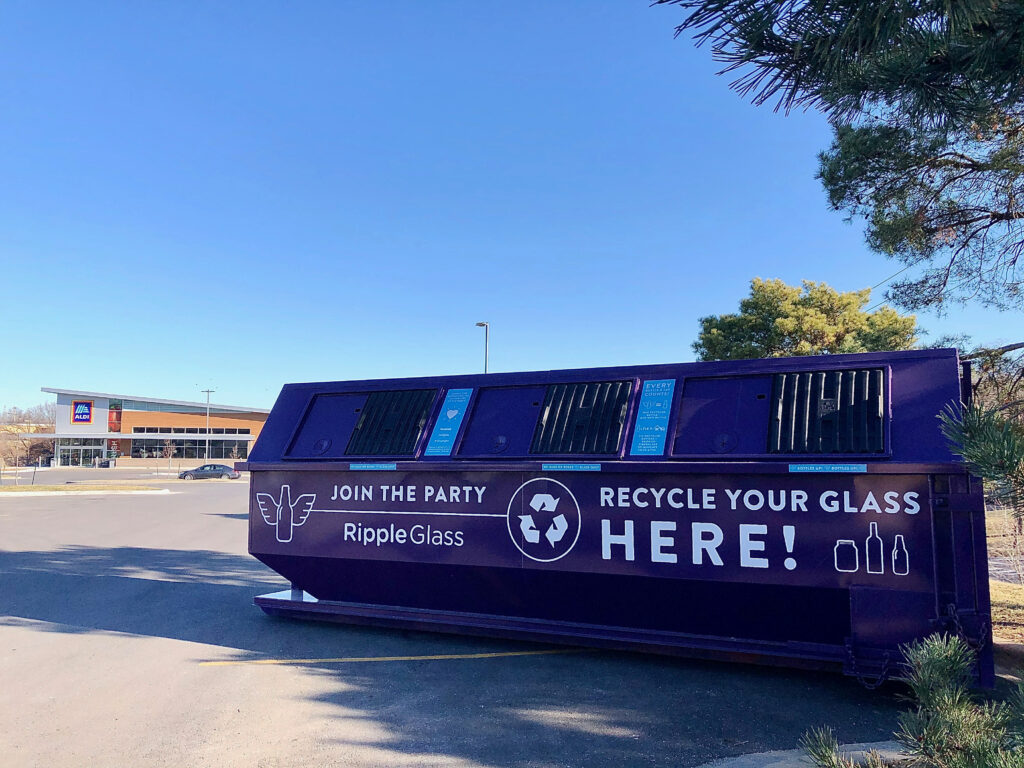
Prior to Ripple Glass opening its doors in 2009, over 150 million glass containers were thrown into Kansas City landfills each year.
Because glass is heavy, dense, and chemically inert, it occupies vital landfill capacity without ever breaking down. Curbside single-stream programs often abandon glass because broken shards damage sorting machinery and contaminate paper and cardboard.
By collecting glass in separate purple bins, Ripple keeps glass pure, prevents other recyclables from contamination, and turns community waste into local manufacturing assets.
Step by Step: How to Recycle Glass
Discover the simple steps to recycle glass responsibly and make a positive impact on the environment with our informative guides.
Collect & Empty
Empty bottles and food jars. Quick rinses are appreciated, but thorough washing is not required.
Keep Labels & Lids On
Labels burn off cleanly in the furnace; metal caps and lids are extracted magnetically during processing.
Drop in a Purple Bin
Drop off at any of our 160+ neighborhood bins or subscribe to curbside pickup in participating neighborhoods.